Insurance for Small Businesses is a critical safeguard that helps protect companies from unexpected financial losses, legal claims, and operational risks. Whether you run a startup, local shop, or service-based company, the right business insurance coverage ensures stability and long-term growth in a competitive market.
From general liability insurance to commercial property and professional liability coverage, small business insurance policies are designed to manage everyday risks. Choosing the correct insurance plan helps business owners stay compliant, protect assets, and focus confidently on expanding their operations.
Small Business Insurance Overview
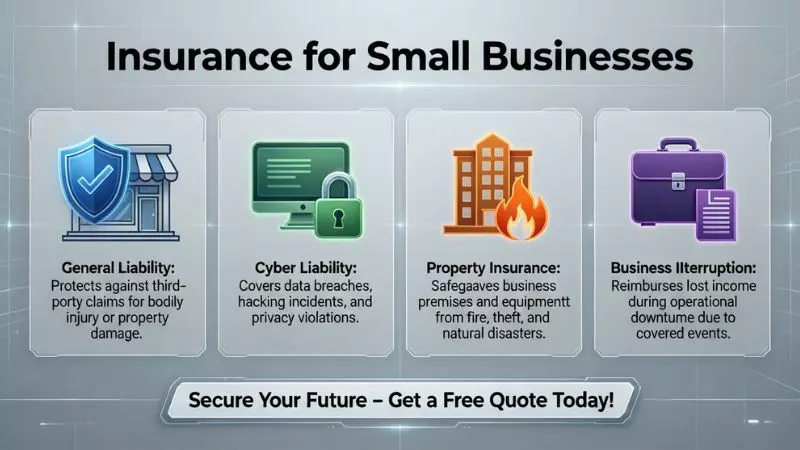
Small business insurance plays a vital role in protecting companies from financial risks, legal liabilities, and unexpected disruptions. Whether you operate a retail store, online business, or service based company, having the right insurance coverage helps secure assets, employees, and long term growth. As markets become more competitive and regulations evolve, updated insurance solutions are now more flexible and industry focused than ever before.
Modern insurance for small businesses is designed to address real world challenges such as customer claims, property damage, cyber risks, and employee related issues. Understanding coverage types, benefits, and policy options allows business owners to make informed decisions and stay compliant while focusing on business expansion.
Insurance for Small Businesses
Insurance for small businesses provides financial protection against common operational risks that could otherwise lead to heavy losses. It acts as a safety net when accidents, lawsuits, or unexpected events occur.
Key points to understand
- Protects business assets and income
- Covers legal expenses and compensation claims
- Builds trust with clients, partners, and investors
- Often required by law or contracts
This type of insurance is suitable for startups, freelancers, home based businesses, and established small companies across various industries.
Business Insurance for Small Businesses
Business insurance for small businesses focuses on tailored coverage based on business size, industry, and risk exposure. Instead of one size fits all solutions, insurers now offer customizable policies.
Common coverage areas
- General liability insurance for third party claims
- Commercial property insurance for buildings and equipment
- Professional liability insurance for service based errors
- Workers compensation insurance for employee injuries
Choosing business specific insurance helps minimize gaps in coverage and ensures better financial stability.
Insurance Benefits for Small Businesses
Insurance offers more than just protection. It supports sustainable growth and improves business credibility in competitive markets.
Major benefits
- Reduces financial uncertainty during crises
- Ensures business continuity after losses
- Enhances customer and vendor confidence
- Helps meet legal and contractual obligations
Well insured businesses are more likely to survive unexpected events and recover faster than uninsured competitors.
Insurance Policies for Small Businesses
Different insurance policies are available to address specific risks. Understanding policy types helps business owners avoid underinsurance or unnecessary costs.
| Policy Type | Purpose |
| General Liability | Covers injuries and property damage claims |
| Commercial Property | Protects physical assets and inventory |
| Professional Liability | Covers errors, negligence, or advice related claims |
| Cyber Liability | Protects against data breaches and cyber attacks |
| Workers Compensation | Covers employee medical and wage benefits |
Selecting the right combination of policies depends on business operations and risk exposure.
Insurance Options for Small Businesses
Insurance options for small businesses vary based on industry, location, and budget. Modern insurers offer flexible plans that allow businesses to scale coverage as they grow.
Popular insurance options
- Business owner policy combining liability and property coverage
- Industry specific insurance for retail, tech, healthcare, and construction
- Short term or annual coverage plans
- Online insurance platforms for quick quotes and policy management
Comparing multiple options helps find cost effective coverage without compromising protection.
Insurance Plans for Small Businesses
Insurance plans for small businesses are structured to balance affordability and coverage depth. The latest plans emphasize digital access, faster claims processing, and customizable limits.
What to look for in an insurance plan
- Clear coverage limits and exclusions
- Affordable premiums with flexible payment options
- Easy policy upgrades as the business grows
- Reliable customer support and claims service
Cost, Pricing & Quotes
Understanding the costs and pricing of insurance for small businesses helps you plan your budget, choose appropriate coverage, and avoid unexpected expenses. Premium rates vary widely depending on business size, industry risk level, location, claims history, and the types of policies you select. In today’s competitive market, small business owners can access transparent pricing tools and instant quote systems that make comparing insurance options faster and more efficient.
Accurate cost estimation empowers you to balance affordable premiums with comprehensive coverage. By knowing how insurance pricing works and where to find real quotes, business owners can negotiate better plans, reduce risks, and protect their bottom line without overpaying.
Insurance for Small Businesses Cost
The cost of insurance for small businesses depends on multiple variables that reflect your company’s risk profile. Insurers evaluate industry risks, revenue, employee count, and past claims to determine premium rates. Understanding the cost drivers helps you make smart insurance decisions.
Factors affecting cost
- Industry risk and business activities
- Size of business and annual revenue
- Number of employees and payroll
- Claims history and risk management practices
- Coverage limits and deductibles
Lower risk companies often receive reduced premiums, while higher risk operations pay more to offset potential claims.
Insurance for Small Businesses Price
Price refers to the actual amount you pay for an insurance policy, typically quoted as an annual or monthly premium. Small business insurance pricing can vary widely between providers, so it pays to compare quotes before making a purchase.
Price considerations
- Higher coverage limits usually increase premiums
- Bundling multiple policies often lowers total cost
- Higher deductibles typically reduce monthly price
- Location based risks such as weather or crime can affect pricing
Using online comparison tools provides clarity on price ranges and helps you identify competitive options.
Insurance Costs for Small Businesses
Insurance costs for small businesses combine several elements including premiums, deductibles, and potential out of pocket expenses. Being aware of these can prevent budget overruns and help you plan for long term protection.
Typical cost components
- Base premium calculated by insurer
- Deductible amounts you pay before coverage kicks in
- Endorsements or extensions for extra coverage
- Administrative fees and policy charges
Smart planning and risk assessment can help reduce overall insurance costs without sacrificing essential protection.
Insurance Quotes for Small Businesses
Getting accurate insurance quotes is essential for choosing the best coverage at the most reasonable price. Quotes reflect personalized cost estimates based on your business profile and chosen coverage limits.
How to get quotes
- Use online insurance marketplaces for instant quotes
- Contact insurance agents for tailored estimates
- Provide detailed business information for accuracy
- Compare multiple quotes before selecting a plan
Reviewing quotes side by side helps you identify the most cost effective solutions.
Insurance for Small Businesses Reddit (Real Experiences)
Real experiences shared on Reddit and other forums provide valuable insights into how small business insurance performs in real life. Business owners often discuss pricing, claims experiences, and how different policies supported them during challenging situations.
Common themes from user experiences
- Surprises in claim processing times
- Cost differences between carriers
- Advice on saving money with bundled policies
- Recommendations for industry specific insurance
Best & Cheap Small Business Insurance
Selecting the best and affordable insurance for small businesses doesn’t mean settling for low quality coverage. The goal is to find plans that provide strong protection without straining your budget. Today’s market offers a range of options tailored to different industries, revenue sizes, and risk profiles. With smart comparison and understanding common policy features, business owners can secure insurance that is both cost effective and comprehensive.
Evaluating the balance between quality and price ensures that your business remains protected against liability, property loss, employee related claims, and more. Below are the key areas every small business owner should consider when choosing top quality yet cheap business insurance.
Best Insurance for Small Businesses
Finding the best insurance for small businesses means looking beyond price and focusing on coverage, reliability, and claims support. Ideal policies are flexible, customizable, and backed by strong customer service.
What makes insurance best
- Broad coverage options that match your business needs
- Strong financial stability of insurance provider
- Positive customer reviews and transparent claims process
- Options for bundling multiple coverages
Some insurers include small business owner policies that combine general liability and property coverage for better value.
Cheap Insurance for Small Businesses
Cheap insurance for small businesses doesn’t necessarily mean low quality. Instead, it refers to cost efficient policies that provide essential protection without unnecessary extras. Lower premiums are often achievable through smart choices.
Tips to find cheap policies
- Compare multiple insurers before buying
- Increase deductibles to reduce premium cost
- Bundle policies like liability and property coverage
- Maintain strong safety practices to reduce risk rating
Affordable coverage is especially important for startups and small teams to manage risks without exceeding budget constraints.
Best Health Insurance for Small Businesses
Health insurance is a crucial part of employee benefits and can significantly impact talent attraction and retention. The best health insurance for small businesses provides comprehensive medical support while keeping costs manageable.
Features of top health plans
- Wide network of doctors and hospitals
- Coverage for preventive care and essential benefits
- Affordable premiums and multiple plan options
- Employee friendly features such as dental and vision add-ons
Many small business owners use group health plans to reduce overall costs and offer better benefits to employees.
Insurance by Business Type
Not all insurance policies fit every business. Tailoring protection to your specific entity type, such as LLCs (Limited Liability Companies), helps ensure proper coverage and compliance. Different business structures have unique risk profiles and coverage needs.
Understanding how insurance varies by business type helps business owners choose plans that align with legal requirements, industry practices, and future growth.
Small Business Insurance for LLC
Insurance for LLCs protects both the business and its owners. While LLCs provide legal protection for personal assets, business insurance adds a financial safety net against liability, property loss, and operational risks.
Key coverage areas for LLCs
- General liability insurance to protect against claims
- Commercial property insurance for business assets
- Professional liability for service related errors
- Workers compensation if you have employees
By choosing the right policies, LLC owners can secure their company’s operations and financial health.
Best Small Business Insurance for LLC
The best small business insurance for LLCs offers tailored coverage that matches the unique structure and needs of your company. It balances comprehensive protection with cost efficiency.
Characteristics of top LLC insurance
- Customizable coverage based on LLC activities
- Flexible policy limits and optional add ons
- Trusted insurers with strong financial ratings
- Positive customer support and claims handling
Best plans often include business owner policies that combine general liability and property insurance at discounted group rates.
Insurance for Small Businesses LLC
Insurance for Small Businesses LLC refers to specific plans designed for limited liability companies. These plans help protect both the business entity and its members from financial losses.
Why LLC insurance matters
- Safeguards business assets and investments
- Helps cover legal defense and settlements
- Supports compliance with regulatory requirements
- Reduces out of pocket expenses during claims
Insurance by Coverage Type
Choosing the right insurance coverage type is essential for protecting your small business against specific risks. Each coverage type addresses different exposures such as liability, employee risks, health benefits, and financial protection from customer defaults. Understanding these options will help you build a strong risk management plan that safeguards your business’s future and supports compliance with industry standards.
Below is an in-depth guide on the most relevant coverage types for small businesses today.
General Liability Insurance for Small Businesses
General liability insurance protects your business from common claims related to third party injury, property damage, and advertising mistakes. It is often the first policy small businesses consider because it addresses everyday operational risks.
Key advantages
- Covers legal defense and settlements
- Responds to slip and fall claims at business locations
- Protects against advertising injury claims
- Builds trust with customers and partners
General liability acts as a foundation for a robust insurance portfolio, especially for service based and client facing businesses.
Workers Compensation Insurance for Small Businesses
Workers compensation insurance provides wage replacement and medical benefits to employees who are injured on the job. Most states require this coverage once you have employees.
Important points
- Covers medical treatment costs
- Provides disability benefits as needed
- Helps manage employer liability
- Often required by law
This insurance boosts employee confidence and supports workplace safety initiatives.
Group Health Insurance for Small Businesses
Group health insurance allows business owners to offer health benefits to their employees at more competitive rates than individual plans. It is one of the most valued benefits that improves employee retention and satisfaction.
Group health insurance highlights
- Lower premium rates through pooled coverage
- Includes preventive care and essential benefits
- Can offer dental and vision add-ons
- Helps attract top talent
Group plans support overall workplace wellness and contribute to a positive company culture.
Health Insurance for Small Businesses
Health insurance for small businesses refers to medical plans that cover employees’ health care needs. These plans vary widely from basic to comprehensive coverage.
What to look for
- Network size of doctors and hospitals
- Preventive care inclusion
- Prescription drug benefits
- Flexible plan tiers for employees
Choosing the right health insurance plan improves employee wellbeing and reduces absenteeism.
Health Insurance for Small Businesses LLC
Health insurance for small businesses organized as LLC offers the same benefits as other business types but may include flexibility in how benefits are structured. LLC owners can choose plans that align with member needs while maximizing tax advantages.
Benefits for LLCs
- Options for employee and owner coverage
- Tax deductible premiums in many cases
- Flexible plan designs
- Supports competitive benefit packages
LLC owners should compare carriers to ensure comprehensive coverage that fits budget and workforce needs.
Medical Insurance for Small Businesses
Medical insurance focuses more narrowly on health care coverage such as doctor visits, hospital stays, and clinical treatments. It may include different plan types such as HMO, PPO, and HDHP.
| Plan Feature | Description |
| HMO | Lowest cost network based care |
| PPO | Wider provider access with moderate cost |
| HDHP | High deductible with lower premium |
| EPO | Exclusive network with no referral limits |
Selecting the right medical insurance plan helps small businesses offer flexible care options to employees.
Trade Credit Insurance for Small Businesses
Trade credit insurance protects against losses from customer non-payment due to insolvency or extended payment defaults. This type of policy is ideal for businesses that sell goods or services on credit.
Benefits
- Reduces risk of bad debt
- Improves access to financing
- Supports expansion with confidence
- Enhances trade relationships
Small businesses with strong credit sales volume benefit most from this protection.
State Farm Car Insurance for Small Businesses
State Farm car insurance for small businesses includes commercial auto coverage that protects company vehicles, drivers, and third party damages. This insurance is critical for businesses that rely on cars or trucks for operations.
Coverage aspects
- Liability protection for bodily injury and property damage
- Collision and comprehensive options
- Uninsured motorist coverage
- Medical payments for injured parties
Choosing a reputable carrier like State Farm helps ensure reliable claims support and tailored coverage.
National Insurance for Small Businesses
National insurance for small businesses refers to broad coverage options from nationwide carriers that offer multiple policy types under one platform. These insurers typically provide strong customer service, financial stability, and widespread agent networks.
Typical offerings
- General liability and property insurance
- Commercial auto insurance
- Workers compensation and health benefits
- Specialty coverages based on industry
Location-Based Small Business Insurance
Location-based small business insurance means understanding how your business’s geographic location affects your coverage needs, requirements, pricing, and legal obligations. Insurance requirements can vary significantly from one region to another based on local laws, risk factors, weather exposures, and marketplace trends. Choosing the right insurance that aligns with your exact location helps protect your business effectively and ensures compliance with regional regulations.
Below are location-specific insights for business owners in local markets, U.S. states, and international contexts.
Insurance for Small Businesses Near Me
When searching for insurance for small businesses near you, it’s important to consider local insurance agents and regional carriers who understand the specific risks in your area. Local professionals can offer tailored quotes, on-site consultations, and personalized recommendations based on community risk profiles.
How to approach local coverage
- Check state licensing and local requirements
- Compare agents and brokers that specialize in regional small business risks
- Ask for on-site risk assessments for property and liability
- Use online quote tools with your zip code for accurate pricing
Using a combination of local expertise and online tools often results in better pricing and more relevant coverage.
Insurance for Small Businesses in California
California has its own regulatory structure for business insurance, especially for workers compensation, commercial auto, and professional liability. Due to large population centers, earthquake risk, wildfires, and strict employment laws, insurance solutions in California are shaped to meet these unique demands.
Key points for California
- Workers compensation insurance is mandatory once you hire employees
- Commercial property may need additional endorsements for earthquake or wildfire coverage
- Professional liability is important for service businesses in tech, consulting, and healthcare
- Regulations may require certain levels of minimum coverage depending on industry
California insurance markets are competitive, and many carriers offer customized plans that consider state-specific exposures and legal nuances.
Insurance for Small Businesses UK
In the United Kingdom, small business insurance must align with UK law, industry standards, and specific risks based on location and business type. Whether you operate in London, Manchester, or a rural community, coverage types and legal obligations can vary.
Common UK requirements
- Employers liability insurance is legally required if you employ staff
- Public liability is not mandatory but highly recommended for customer-facing businesses
- Professional indemnity insurance is essential for consultants, freelancers, and service providers
- Business property insurance protects assets against fire, theft, and weather damage
UK small business owners should check local regulations and industry guidance to ensure they meet all legal coverage requirements and protect their business assets effectively. Many UK insurers also offer bundled business owner policies that combine multiple coverage types with competitive pricing.
Companies, Brokers & Agents
Choosing the right insurance partner can make all the difference when securing reliable, affordable coverage for your small business. Whether you work directly with insurance companies, brokers, or independent agents, understanding each option helps you find tailored solutions that match your needs, budget, and industry requirements. Below are key categories that every business owner should know when exploring coverage options.
Small Business Insurance Companies
Small business insurance companies are licensed carriers that underwrite and issue policies directly to business owners. These companies typically offer a range of coverage types, from general liability to workers compensation and commercial property insurance.
What top companies offer
- Customizable insurance plans
- Online quoting tools for fast estimates
- Industry specific coverage options
- Claims support and loss prevention resources
Working with reputable insurers ensures financial reliability and strong customer service throughout the life of your policy.
Insurance Companies for Small Businesses
Insurance companies for small businesses specialize in the unique risks and regulatory requirements that smaller enterprises face. They often provide bundled packages and flexible payment options to make coverage more accessible.
Common features
- Business owner policies combining key coverages
- Optional add ons like cyber liability or professional indemnity
- Tiered plans based on business size and industry
- Competitive premiums with scalable options
These carriers help business owners balance protection, price, and operational needs.
Insurance Brokers for Small Businesses
Insurance brokers act as middlemen between your business and multiple insurance carriers. They don’t work for one company, which allows brokers to compare options from several sources and recommend the best fit for your specific situation.
Benefits of using brokers
- Access to multiple insurance carriers
- Personalized policy recommendations
- Help with quote comparison and negotiation
- Support during claims and renewals
Brokers are ideal for business owners who want professional guidance and a broad view of market options.
Insurance Agents for Small Businesses
Insurance agents represent one or more carriers and help business owners select, purchase, and manage insurance policies. Independent agents work with multiple insurers, while captive agents specialize in coverage from a specific company.
Agent advantages
- Local expertise and personal service
- Assistance with application and documentation
- Guidance on coverage limits and endorsements
- Ongoing support for renewals and claims
A good agent helps simplify the insurance process and ensures you know exactly what your policy includes.
Next Insurance
Next Insurance is a modern digital insurer focused on simple, affordable small business coverage. With a strong online platform, quick quoting, and policies designed for specific industries, it has become a top choice for many small business owners.
Why businesses choose Next Insurance
- Fast online quotes and instant policy issuance
- Industry targeted plans for contractors, consultants, and more
- Competitive pricing with flexible add ons
- Digital certificate management and easy renewals
Next Insurance is particularly attractive for startups and tech savvy business owners who value speed and transparency.
Owner-Specific Coverage
Insurance needs can vary depending on the role and responsibilities of the business owner. Tailored owner focused coverage ensures that not only your business but also you as an owner are protected against personal liability and professional risks.
Insurance for Small Business Owners
Insurance for small business owners includes a variety of protections designed to safeguard both personal and company interests. These policies help you manage financial risk and focus on growth with confidence.
Types of owner focused coverage
- General liability insurance to protect against client claims
- Professional liability insurance for service related risks
- Business interruption insurance for revenue protection during closures
- Key person insurance to protect against loss of essential staff
- Directors and officers insurance for leadership liability
Frequently Asked Questions
What is Insurance for Small Businesses?
Insurance for small businesses protects companies from financial losses caused by lawsuits, property damage, employee injuries, and operational risks through structured coverage plans.
Why do small businesses need insurance coverage?
Small businesses need insurance to manage legal liability, protect assets, meet regulatory requirements, and ensure long term financial stability.
How much does Insurance for Small Businesses cost?
The cost of insurance for small businesses depends on industry risk, location, revenue, number of employees, and selected coverage limits.
What types of insurance are best for small businesses?
Common types include general liability insurance, workers compensation, commercial property insurance, professional liability, and health insurance.
Is Insurance for Small Businesses legally required?
Some coverages like workers compensation and commercial auto insurance are legally required depending on location and business structure.
Can small businesses get affordable insurance plans?
Yes, small businesses can access affordable insurance by bundling policies, choosing higher deductibles, and comparing multiple insurance providers.
How do I get Insurance for Small Businesses quotes?
You can get quotes online, through insurance brokers, or by working with licensed insurance agents who assess your business risks.
Does Insurance for Small Businesses cover lawsuits?
Yes, liability based insurance policies help cover legal defense costs, settlements, and claims related to injuries or property damage.
Final Words on Insurance for Small Businesses
Insurance for Small Businesses is not just a legal formality but a smart investment in protection and growth. It helps business owners manage risks, safeguard assets, and maintain operational continuity during unexpected events.
With flexible coverage options, modern insurance solutions now fit businesses of all sizes and industries. Choosing the right policy builds trust, supports compliance, and allows owners to focus confidently on scaling their business without fear of financial setbacks.

Chriselle Lim is a passionate digital creator and lifestyle blogger based in California, USA. As the voice behind Blogzeno, she shares creative captions, inspiring Instagram bios, insightful celebrity stories, and simple insurance guides designed for everyday readers. Emily believes that words have the power to connect people whether it’s through a perfect caption or a helpful article.
With years of experience in online writing and content strategy, Emily’s mission is to make information both useful and enjoyable. Her work blends creativity with clarity, helping readers express themselves confidently and stay informed about what truly matters.
When she’s not writing, you’ll find her exploring photography, social media trends, and new ways to inspire digital creators worldwide. Follow her journey on Blogzeno — where creativity meets everyday life.